


Immunohematology Made Easy (2)
General Topics – Key Principles and Everyday Practices
📘 Available now in PDF & EPUB formats
🔗 Visit Store
Peace be upon you, and may the mercy and blessings of Allah be upon you.
 This sentence came up during a conversation between two people working at different blood banks. It happened when a patient went to a certain blood bank for the first time and needed O plasma because the patient’s blood group was O positive—“that’s what they were told.”
 A blood transfusion request and a sample were received for a 20-year-old female patient. Her blood group was tested and came out as A positive, but the reactions were somewhat weak, like this:
 Anti-A: 2+ Anti-B: 0 Anti-D: 2+ Control: 0 A1 cells: 0 B cells: 4+
 Of course, another sample was requested for confirmation, and the same result was obtained!
 So how was she being reported as O,
and how was an O red cell unit issued and transfused to her?!!
 The family requested that there be a discussion with the place that had issued the red cell unit, and this is what actually happened after the greetings and introductions:
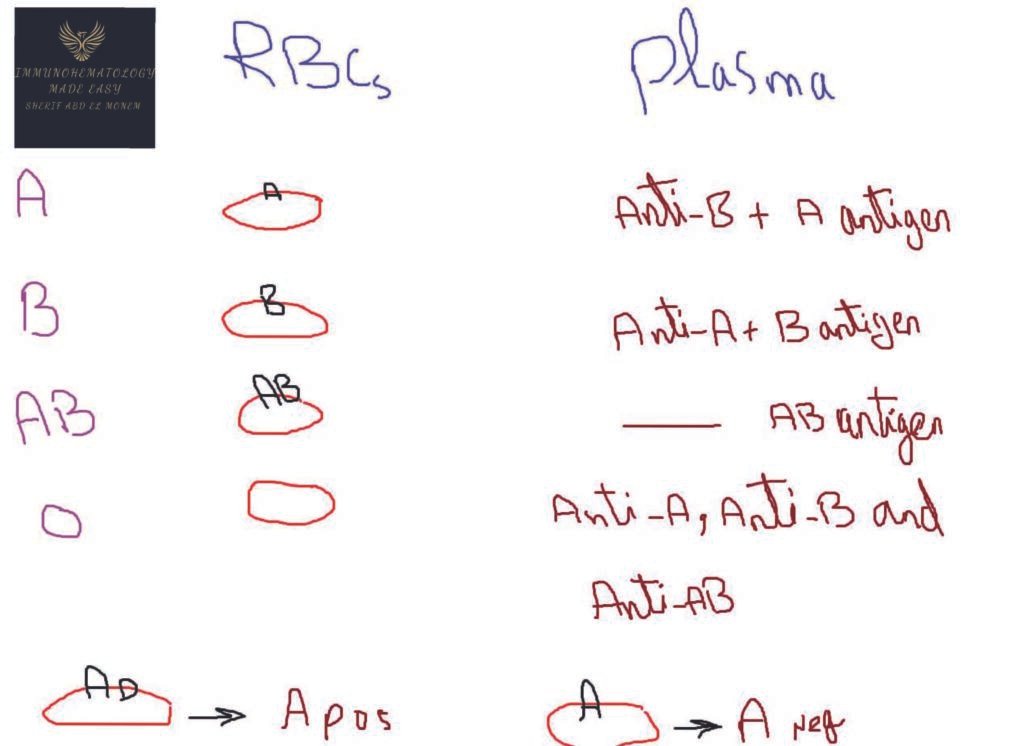
 The one who works correctly: There was a patient who received blood from you yesterday, named “…..”? The one who works incorrectly: Exactly. Her blood group was O positive, and we issued a unit of red cells. The one who works correctly: Was her blood group O positive, or did you perform the crossmatch with O blood and it came out compatible, so you issued it based on that? The one who works incorrectly: No, no. Her blood group was O positive to begin with. The one who works correctly: Are you sure? The one who works incorrectly: Of course. We confirmed it twice before issuing it. The one who works correctly: Okay, sorry, but how do you perform blood grouping? The one who works incorrectly: What do you mean, how do we perform it? What method do you mean? We did it on a slide and issued her a unit of red cells. The one who works correctly: You perform blood grouping using a slide?!!! The one who works incorrectly: Yes, of course. What’s the problem with that? The one who works correctly: This method is completely wrong, and no blood group should be determined using it, nor should its result be relied upon in the first place. The one who works incorrectly: Why? Can you explain? The one who works correctly: Okay, quickly, so I don’t take up too much of your time. I’ll send you a picture on WhatsApp now. When you perform blood grouping using the slide method and use the three reagents—anti-A, anti-B, and anti-D—and based on the reaction that appears on the slide you determine the blood group of the sample, correct?! The one who works incorrectly: Yes, exactly. The one who works correctly: Unfortunately, this is very wrong and incorrect, and there are 3 problems with it. Before I tell you what they are, I just want to briefly explain something about ABO/Rh:
 As you can see in the picture I sent, we have the blood groups: A, B, AB, and O. A person with blood group A is supposed to have A antigen on their red cells, and in their plasma they have anti-B and A antigen. A person with blood group B is supposed to have B antigen on their red cells, and in their plasma they have anti-A and B antigen. A person with blood group AB has AB antigen on their red cells, and in their plasma they are not supposed to have any antibodies against them, and they have AB antigen. A person with blood group O has neither A nor B antigen on their red cells, and in their plasma they have anti-A, anti-B, and anti-AB.
 As for Rh: if the red cells have D antigen, we say, figuratively, that they are positive, and if they do not have D antigen, we say, figuratively, that they are negative. Okay, are you following me so far, or have I lost you? The one who works incorrectly: No, no, I’m following you perfectly. The one who works correctly: This means that when you perform the test using the slide method:
 – You are only testing the part on the red cells—the (antigens)—without checking what antibodies are present in the plasma, and of course that is not correct.
 – The reactions on the slide are often weak, and you cannot determine the strength of the reaction.
 – There is one part that you are not doing, which is the control. Since you are testing the red cell portion, meaning you react the red cells with anti-A, anti-B, and anti-D, you should also test the sample’s red cells alone (without reagent) to see whether these cells undergo any agglutination without any reagent or not. Because if that happens, we do not rely on any reaction with any reagent. Let me give you two examples to clarify the problem:
 1- Like the case we have here: on the slide, there is only a reaction with anti-D, and it is also weak. You would report the blood group as O positive, while the patient’s actual blood group is A, and for certain reasons it appears this way. 2- Another case on the slide gives reactions with all three reagents, and you would report it as AB positive, while the patient’s blood group is actually O negative.
 Do you realize how serious the problem is!!!
 Here is the major problem in the case we have: Do you know that when the reaction with anti-D is somewhat weak in a female who needs a blood transfusion or needs an anti-D injection, we are supposed to—“with limited resources”—consider her as negative and transfuse her with negative red cells, and if she needs the injection, she receives it. And of course, none of this happened in the case we have here! She was transfused with positive red cells “when she should have received negative,” and as a result her body may develop anti-D. This means that we could be putting her at risk of pregnancy complications, miscarriage, or having a baby born with many problems. Do you see the tragedy now! Of course, this is in addition to the fact that she was reported as O. So if someone had relied on what you told them and issued O plasma for her, what would the situation have been then? The one who works incorrectly: Honestly, I don’t know what to say! It’s as if I’m hearing this for the first time. This is what I learned from the people before me. So what is the correct method supposed to be? The one who works correctly: When performing blood grouping for any sample, we absolutely have to use one of three methods: The tube method. The gel method. The solid-phase method.
 Of course, the tube method is the most common of them and is available almost everywhere. In other words, anyone can use it in any laboratory or hospital.
There is also the gel method if it becomes available to you at any point, and there are many video clips explaining these methods
 Please listen to them carefully
and apply what is explained in them. You have seen how serious the situation can be, and forgive me if I took too long with you.
The one who works incorrectly: No, no, you didn’t take too long at all. May Allah reward you with generously for this conversation. It really clarified many things for me and alerted me to things I had never noticed before. We’ll be in touch again, God willing, at the earliest opportunity. That was the conversation between the one here and the one there, and thankfully, “the one who works incorrectly” eventually became “the one who works correctly,” and he started trying to advise someone else because he began to consider every patient we work with as if they were one of his own family. And no one would accept having a family member exposed to anything— just something wrong, but even something that might involve any doubt.
 May Allah reward you with generously, and I encourage you to share this and to remove harm from people’s path.
 Regards,
Sherif Abd El Monem
 Founder | Immunohematology Made Easy
 Alexandria, Egypt
Immunohematology Made Easy (2)
General Topics – Key Principles and Everyday Practices
📘 Available now in PDF & EPUB formats
🔗 Visit Store
📘 New to Blood Bank?
Start your 5-day journey with Immunohematology Made Easy — a simple, beginner-friendly guide with real-life examples!
Immunohematology Made Easy (2)
General Topics – Key Principles and Everyday Practices
📘 Available now in PDF & EPUB formats
🔗 Visit Store